Veterans Bike Trail to Zim Smith Trail

Updated: Apr 11
Exciting Announcement: Ballston's Proposed Bike Trail Extension!
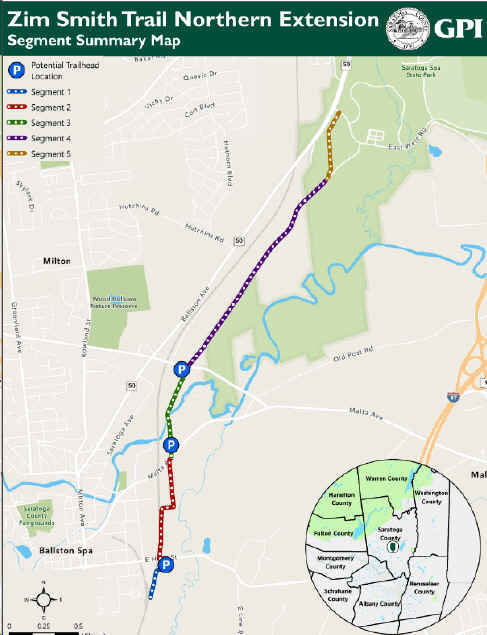
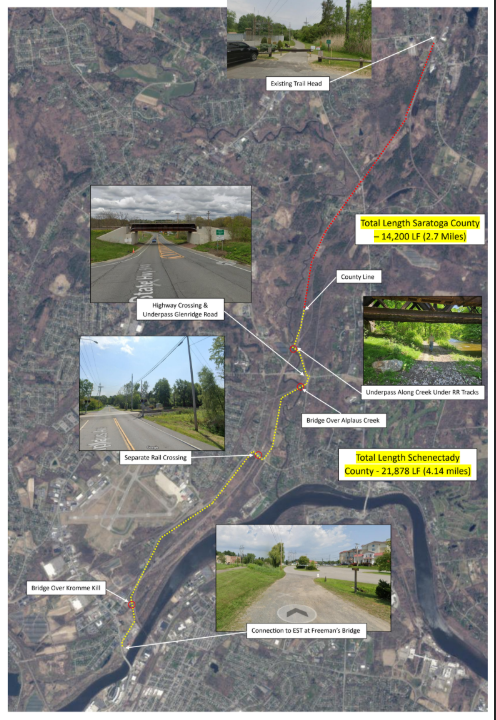
We are thrilled to share that Ballston's proposed bike trail extension is set to become a vital link between Saratoga County's extension to Saratoga State Park to the north and Schenectady County's extension to the Mohawk Hudson Bike Trail to the south. This project represents a significant opportunity for our community!
During my six years as Town Supervisor, we have successfully increased our Town fund balances to an impressive $4.6 million. We have meticulously planned for the 20% match required by the $5 million state grant, ensuring that we are well-prepared to move forward with this initiative. While the grant application did require a resolution that the current Town Supervisor voted "no" on, it ultimately passed with a strong 4 to 1 vote, reflecting the community's desire for progress.
Community Support and Leadership
Based on two comprehensive surveys, there is overwhelming support for this crucial connection. However, realizing this vision will require strong leadership and commitment. The statistics on trail usage clearly demonstrate public sentiment in favor of this project.
It is important to remember that the Town Supervisor plays a pivotal role in shaping the agenda. Significant improvements like this bike trail extension must be approved by the Town Board, but for that to happen, the proposal needs to be included in the Town Board agenda. Your voice matters in this process!
Visualizing the Future
To help you visualize the potential of this project, I have included images that illustrate the proposed northern and southern extensions. Please keep in mind that these extensions are a work in progress, and they have garnered strong community support.
Together, let’s champion this initiative and make the bike trail extension a reality for our Town!
Here is some research to consider on the value of creating bike trails. This isn’t something we are guessing on. We have done our due diligence.
Return on Investment
The Rails-to-Trails Conservancy study “Active Transportation Transforms America” — the nation’s most comprehensive analysis of its kind — found that active transportation infrastructure currently contributes more than $34.1 billion to the U.S. economy, with the potential to grow to $138.5 billion annually. That’s nearly seven times greater every year than the cumulative $20 billion invested in trails and biking projects through federal programs over the past three decades.
Healthcare Savings
A cost-benefit analysis of bike/pedestrian trails in Lincoln, Nebraska found that every $1 invested in trails for physical activity yielded $2.94 in direct medical benefit. Separately, researchers found that for every dollar spent building new separated bike lanes, cities could save as much as $24 through lower healthcare costs and reduced pollution and traffic.
Job Creation
A 2011 study from the University of Massachusetts at Amherst estimated that for every $1 million spent on bicycle and pedestrian facilities, 11.41 jobs were created for bicycle infrastructure and 9.91 for pedestrian infrastructure. On a larger scale, a $26.7 million investment in four shared-use paths in North Carolina supported 790 jobs annually through greenway construction.
Tourism & Local Business
Mountain biking tourists spend an average of $416 per visit, contributing to local businesses, lodging, and dining. Trail networks studied by the Trust for Public Land generated up to 1,626 jobs and $54.1 million in labor income annually. A specific example: Chattanooga, Tennessee’s mountain biking trails support an estimated $7.4 million in local economic activity, while Oakridge, Oregon — a former logging town — revitalized its economy by investing in mountain biking, leading to increased tourism and new jobs.
Property Values
Research by Boise State University and NC State University found that homes near Raleigh’s Capital Area Greenway System saw property value increases of up to 12%.
Community Revitalization
In Chattanooga, following a public and private investment of $356 million in the downtown riverfront (which included parks and trails), the number of businesses and full-time jobs more than doubled, assessed property values rose by 127.5%, and annual combined city and property tax revenues for the area increased 99%.
The Bottom Line
Research has generally found that a trail can bring at least $1 million annually to a community — and the evidence across health, tourism, property values, and job creation consistently points in the same direction.
